
Engineered for Excellence: Assistive Devices in Modern Athletics
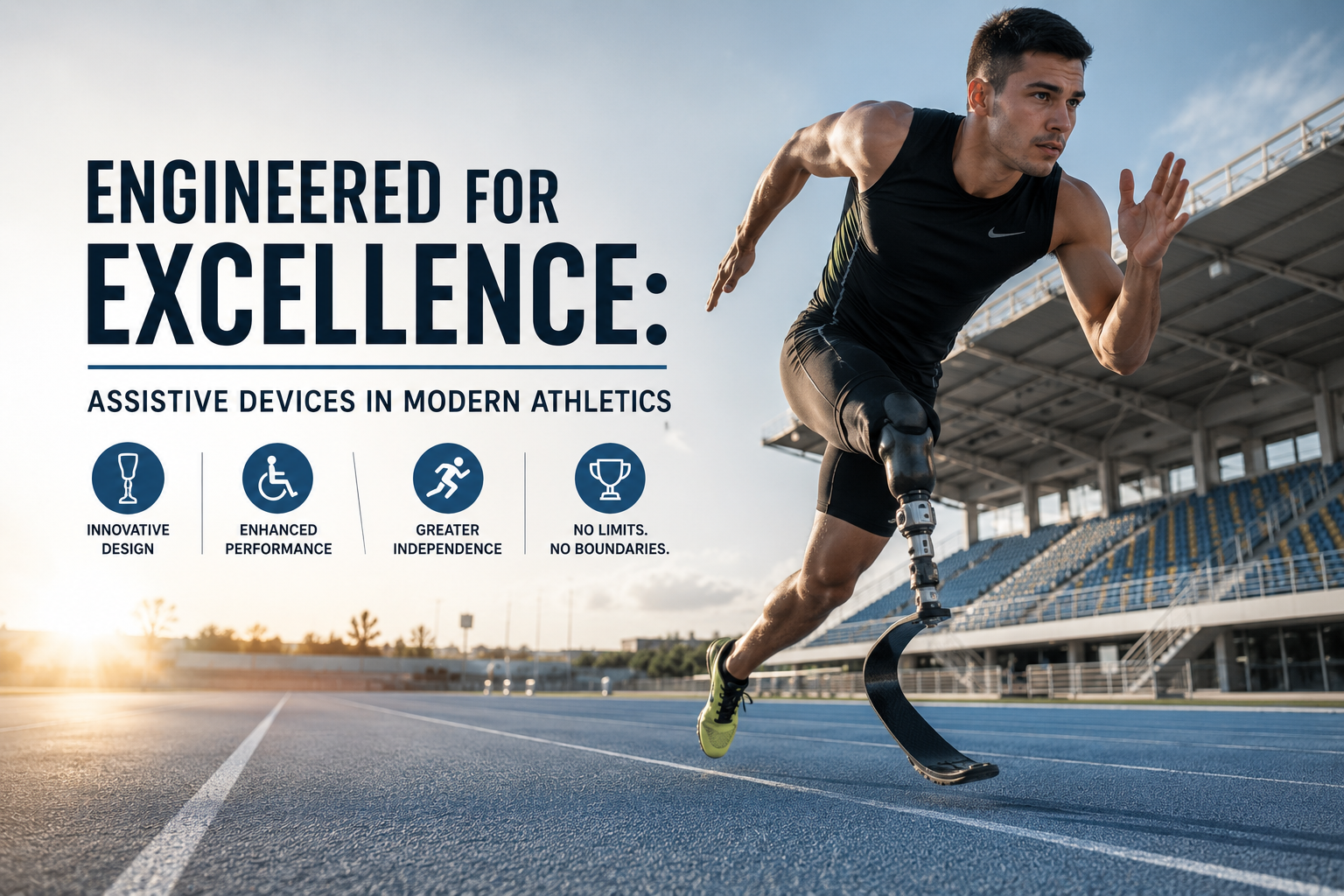
Assistive devices in athletics are redefining competitive sports by enabling athletes with disabilities to perform at peak levels and compete on the global stage. Advances in engineering, biomechanics, and sports science have led to the development of highly specialized equipment that enhances mobility, performance, and independence. From carbon-fiber running blades and adaptive cycling systems to sport-specific wheelchairs and advanced prosthetic limbs, these technologies are helping athletes push physical boundaries and achieve levels of excellence once considered unattainable.
Modern athletic prosthetics are designed to optimize speed, balance, and energy efficiency while accommodating the unique movements required in different sports. Running blades, for example, are engineered to store and release energy with each stride, allowing athletes to sprint with remarkable power and agility. Similarly, adaptive sports wheelchairs are customized for specific activities such as basketball, tennis, rugby, and racing, with lightweight frames, specialized wheel configurations, and ergonomic designs that maximize maneuverability and control. These innovations enable athletes to compete with greater confidence and precision while reducing physical strain and improving overall performance.
The development of assistive athletic devices relies heavily on biomechanics, data analytics, and athlete-centered design. Engineers and sports scientists work closely with athletes to create equipment that responds to individual needs, body mechanics, and performance goals. Motion-capture technology, pressure sensors, and performance monitoring systems provide valuable insights that help refine equipment design and enhance athletic outcomes. As a result, assistive devices are becoming increasingly sophisticated, offering higher levels of comfort, responsiveness, and efficiency.
Beyond performance enhancement, assistive devices also play an important role in promoting inclusion and expanding opportunities within sports. They allow individuals with disabilities to participate in recreational activities, community programs, and elite competitions, fostering physical health, social engagement, and personal achievement. International events such as the Paralympic Games have highlighted the incredible capabilities of adaptive athletes while increasing awareness of the importance of accessibility and innovation in sports.
Despite these advancements, significant challenges remain. High-performance assistive devices can be extremely expensive due to the advanced materials, customization, and research involved in their development. Many athletes face financial barriers that limit access to the latest technology, creating disparities in training and competition opportunities. Access can be even more limited in developing regions where funding, specialized services, and adaptive sports programs may be scarce. These challenges underscore the need for greater investment, policy support, and initiatives aimed at making adaptive sports equipment more affordable and widely available.
Looking toward the future, emerging technologies such as artificial intelligence, smart sensors, 3D printing, and advanced materials are expected to further revolutionize assistive athletic devices. These innovations may lead to more personalized equipment, improved durability, enhanced performance tracking, and lower manufacturing costs. As technology becomes more accessible, a greater number of athletes will have the opportunity to benefit from equipment designed to support their ambitions and unlock their full potential.
Ultimately, assistive devices in athletics represent more than technological achievement—they symbolize empowerment, inclusion, and the pursuit of excellence. By combining innovation with accessibility, the sports industry can continue to create opportunities for athletes of all abilities to compete, succeed, and inspire future generations. The ongoing evolution of adaptive sports technology demonstrates that athletic potential is not defined by disability, but by determination, opportunity, and access to the tools that enable success.
Source Tag:
Research Paper (ResearchGate)
Title: Innovating Inclusion: Adaptive Technology and Its Impact on Performance and Participation in Disability Sports
Date: 2025
Summary: Examines assistive sports devices and their impact on performance and inclusion.
Read the full article at https://www.researchgate.net/publication/394832752_Innovating_Inclusion_Adaptive_Technology_and_Its_Impact_on_Performance_and_Participation_in_Disability_Sports

Need help? Talk to our expert.
Connect with a trusted agent who knows the market inside out - whether you’re buying or selling.