
Independence in Motion: Redefining Disability Through Mobility Innovation
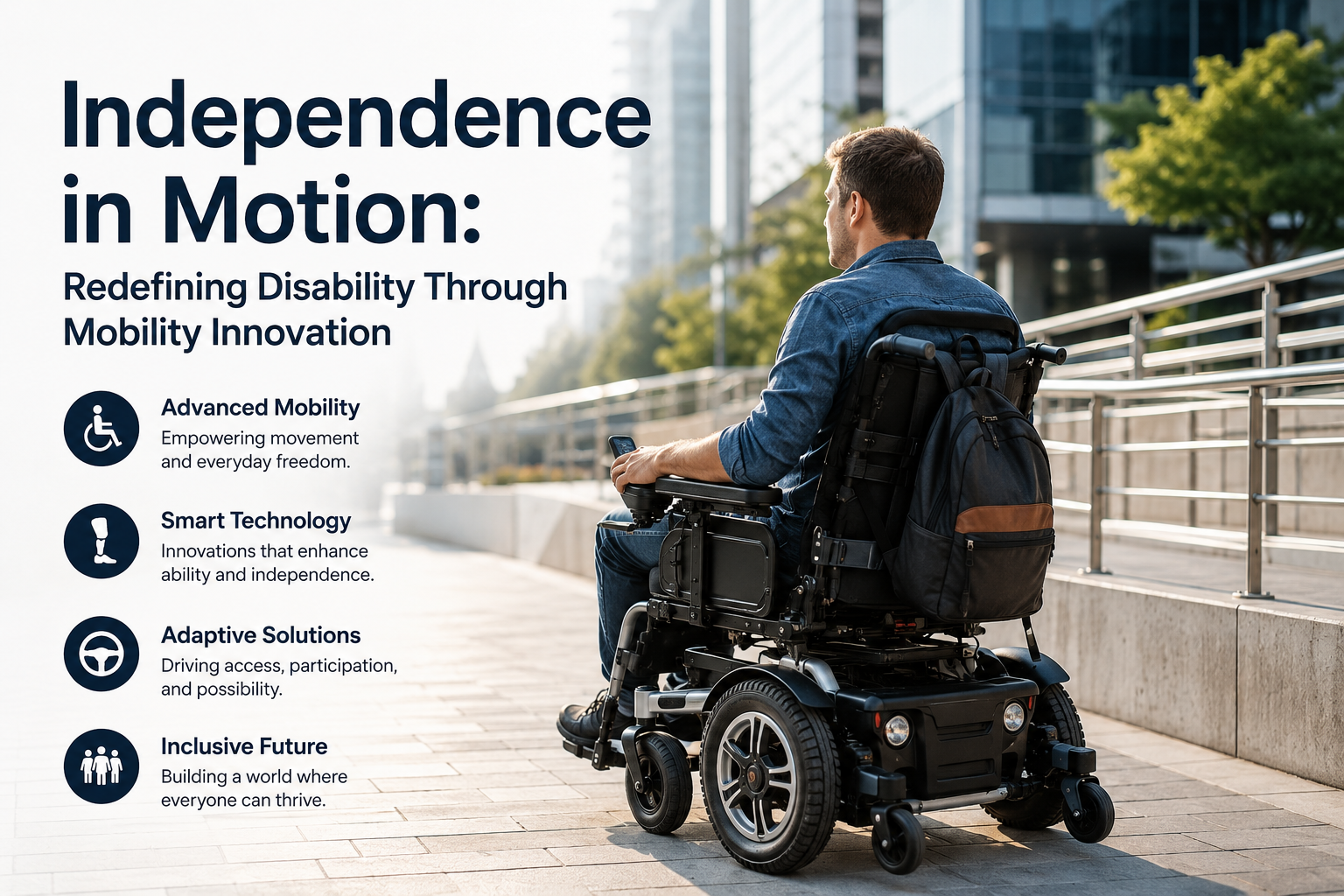
Disability and independence are increasingly being reshaped by remarkable advancements in assistive technologies, accessible infrastructure, and inclusive social systems. As innovation continues to evolve, individuals with disabilities are gaining greater opportunities to participate fully in education, employment, recreation, and community life. Modern mobility solutions such as powered wheelchairs, smart prosthetics, exoskeleton devices, and adaptive driving systems are helping people overcome physical barriers and achieve higher levels of autonomy in their daily routines. These technologies are not simply improving mobility; they are expanding opportunities, fostering confidence, and enhancing overall quality of life.
Powered wheelchairs now offer advanced features such as customizable controls, obstacle detection, terrain adaptation, and smart navigation systems, allowing users to move more independently across a variety of environments. Similarly, smart prosthetics equipped with sensors, microprocessors, and artificial intelligence can respond to natural movement patterns, providing greater comfort, precision, and functionality. Adaptive driving technologies, including hand controls, steering assistance systems, and vehicle modifications, enable many individuals with disabilities to travel independently, reducing reliance on caregivers and increasing access to employment, healthcare, and social activities.
The concept of independence itself has evolved significantly over time. Rather than being measured solely by an individual's physical abilities, independence is increasingly understood as the ability to make choices, access opportunities, and participate fully in society. Assistive technologies empower users by removing barriers that once limited their options, allowing them to engage more actively in personal, professional, and recreational pursuits. Whether pursuing higher education, building a career, participating in sports, or simply completing everyday tasks, access to the right tools can make a profound difference in an individual's sense of freedom and self-determination.
However, technology alone cannot create true independence. Inclusive communities and accessible environments are equally important. Public spaces, transportation systems, workplaces, educational institutions, and digital platforms must be designed with accessibility in mind. Features such as ramps, elevators, tactile paving, accessible public transit, automatic doors, and screen-reader-compatible websites help create environments where individuals with disabilities can navigate and participate with fewer obstacles. Universal design principles, which aim to make spaces and products usable by the widest range of people possible, are becoming increasingly recognized as essential components of an inclusive society.
Social inclusion also plays a vital role in fostering independence. Individuals with disabilities benefit when communities embrace diversity and actively work to eliminate stigma and discrimination. Inclusive workplaces, adaptive recreational programs, accessible educational opportunities, and community support networks all contribute to a stronger sense of belonging and participation. When people with disabilities are viewed as active contributors rather than passive recipients of assistance, barriers to social and economic participation begin to diminish.
Government policies and advocacy efforts are another crucial part of this transformation. Accessibility regulations, disability rights legislation, employment protections, and funding programs for assistive technology help create pathways to greater independence. Public investment in accessible infrastructure and inclusive services ensures that individuals have the resources they need to participate fully in society. Advocacy organizations continue to raise awareness, promote accessibility standards, and encourage innovation that benefits people with diverse abilities.
Looking ahead, emerging technologies promise even greater possibilities for independence and empowerment. Artificial intelligence, robotics, wearable devices, smart home automation, and connected mobility solutions are opening new avenues for accessibility. AI-powered navigation systems can assist individuals with visual impairments, while smart home technologies allow users to control lighting, security, appliances, and communication systems through voice commands or adaptive interfaces. These innovations have the potential to make daily living more convenient, efficient, and accessible than ever before.
Ultimately, disability and independence are no longer defined by physical limitations but by the availability of accessible tools, supportive environments, and inclusive opportunities. As technology advances and society continues to prioritize accessibility and inclusion, individuals with disabilities are gaining greater control over their lives and expanding what is possible. By combining innovation, thoughtful design, social acceptance, and policy support, communities can create a future where everyone has the opportunity to live independently, pursue their goals, and participate fully in all aspects of life.
Source Tag:
Springer Nature Book
Title: Inclusive and Barrier-Free Designs for Rehabilitation Engineering
Date: 2026
Summary: Focuses on rehabilitative technologies supporting independence and quality of life.
Read the full article at https://link.springer.com/book/10.1007/978-981-95-5783-7

Need help? Talk to our expert.
Connect with a trusted agent who knows the market inside out - whether you’re buying or selling.