
Designing for Everyone: Building Spaces That Move with Human Diversity
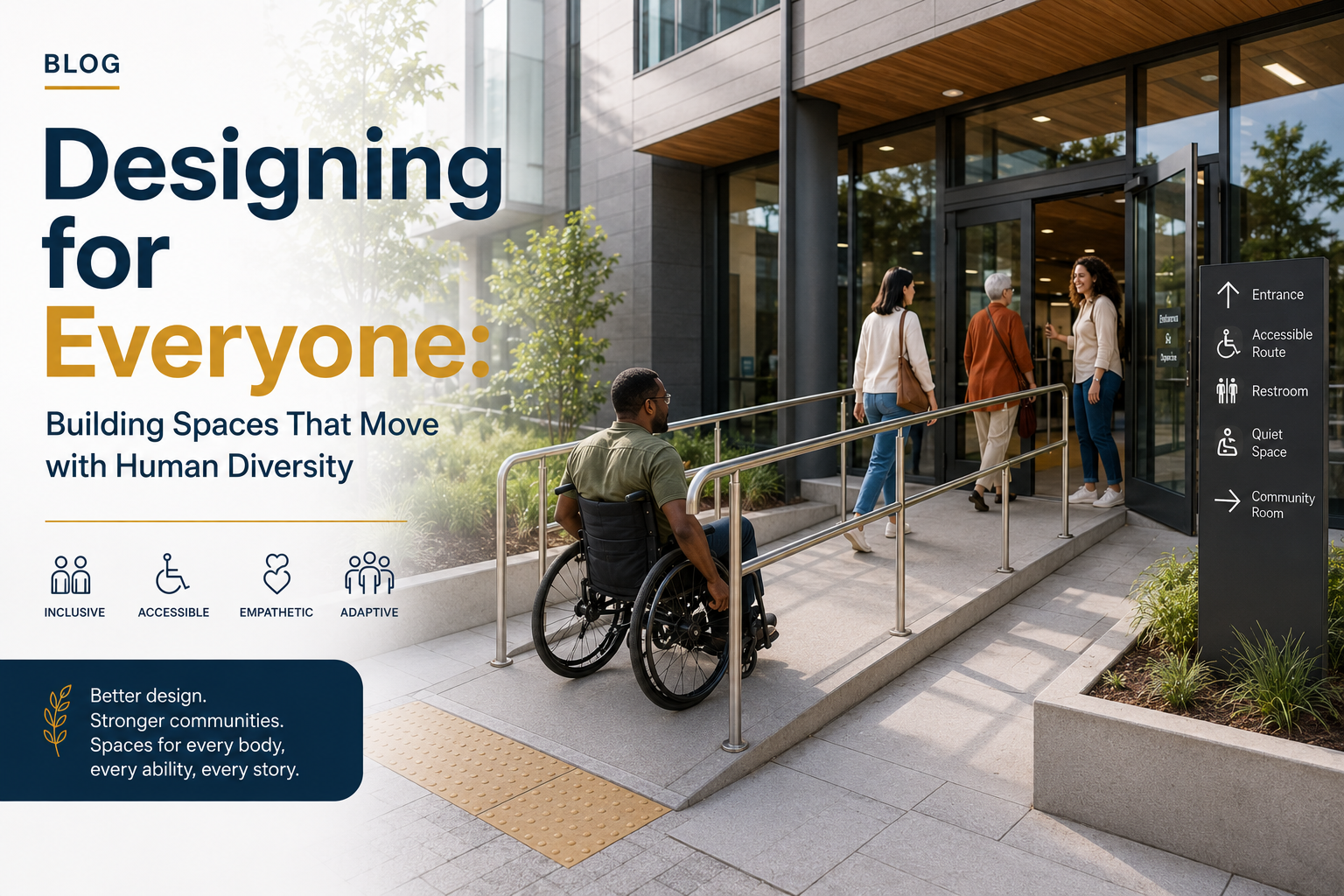
Inclusive recreation design is reshaping how public spaces are imagined, built, and experienced. At its foundation, it is guided by the principle that recreation should be accessible to all individuals regardless of age, ability, or mobility level. This approach moves beyond compliance with accessibility standards and toward a more holistic understanding of human-centered design, where physical environments support freedom of movement, social interaction, and emotional well-being.
Modern inclusive recreation spaces are designed with mobility diversity in mind. Parks, playgrounds, sports complexes, and community centers are increasingly incorporating features such as wheelchair-accessible pathways, adaptive playground equipment, sensory-friendly zones, and adjustable fitness stations. These elements ensure that individuals with varying mobility needs can navigate and engage with environments independently and safely. Mobility is no longer treated as a constraint but as a design variable that shapes spatial planning.
One of the most important aspects of inclusive recreation design is universal access to movement. Wide, obstacle-free pathways allow seamless navigation for wheelchairs, walkers, and mobility aids. Surface materials are carefully selected to balance durability with ease of movement, reducing friction and increasing safety. Gradual slopes replace abrupt steps, and seating areas are distributed throughout spaces to provide rest points for users with limited endurance. These design decisions collectively create environments where mobility is fluid and uninterrupted.
Sensory accessibility is also becoming a key consideration. Inclusive recreation spaces now integrate features that support individuals with sensory processing differences, including quiet zones, tactile markers, and visual contrast enhancements. These additions ensure that recreation is not only physically accessible but also cognitively and emotionally supportive. Mobility, in this sense, is expanded to include sensory navigation and environmental comfort.
Technology is further enhancing inclusive recreation design. Smart infrastructure systems can provide real-time information about facility accessibility, crowd density, and route optimization. Mobile applications allow users to locate accessible entrances, reserve adaptive equipment, and plan their visits based on mobility needs. These digital tools empower individuals to engage with recreation spaces independently, reducing reliance on external assistance.
Community engagement plays a central role in shaping inclusive design outcomes. Many modern projects involve direct consultation with individuals who use mobility aids, ensuring that lived experience informs architectural and spatial decisions. This participatory approach leads to more practical and meaningful design solutions that reflect real-world mobility challenges.
However, challenges remain in achieving truly universal inclusivity. Many existing public spaces were not originally designed with accessibility in mind, making retrofitting costly and complex. In addition, inconsistencies in design standards across regions mean that accessibility quality can vary widely. There is also a need for greater awareness among designers and planners regarding the diverse nature of mobility requirements.
Despite these challenges, inclusive recreation design represents a major shift in how society understands space and movement. It acknowledges that mobility is not uniform and that environments must adapt to human diversity rather than the other way around. As this philosophy continues to evolve, recreation spaces are becoming more than just physical locations. They are becoming inclusive ecosystems that support health, independence, and social connection.
Ultimately, inclusive recreation design is about freedom of movement. It is about ensuring that every individual, regardless of mobility level, can access, enjoy, and participate in shared spaces without limitation. Through thoughtful design and innovation, recreation becomes a universal experience rather than a selective one.
Need help? Talk to our expert.
Connect with a trusted agent who knows the market inside out - whether you’re buying or selling.